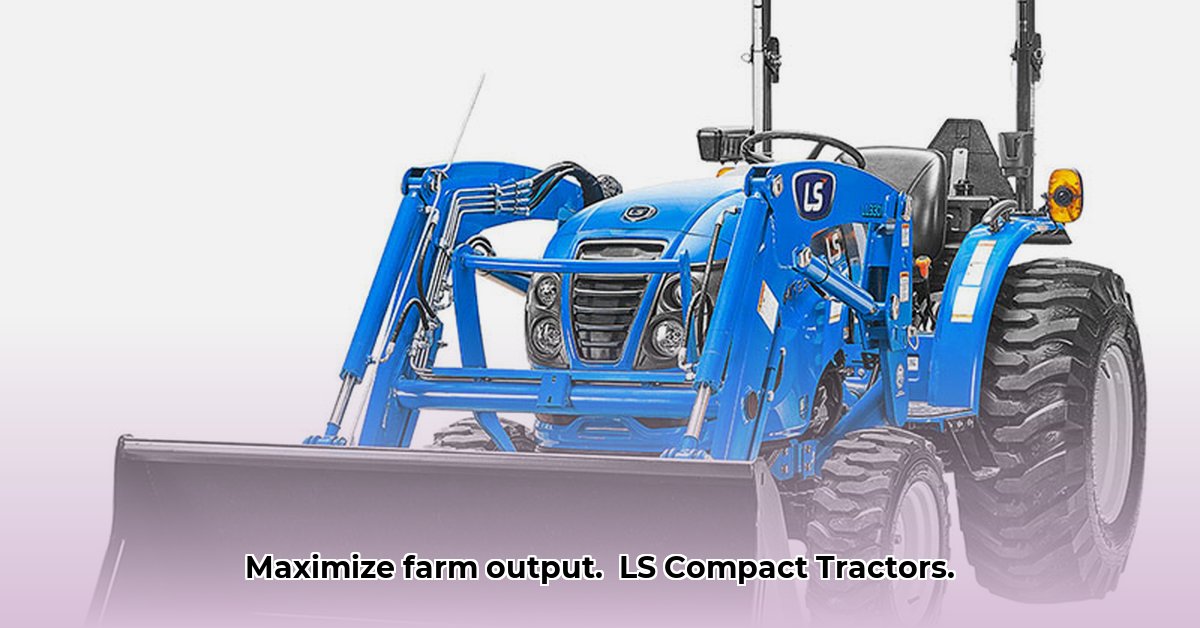
LS Compact Tractors: A Deep Dive into Efficiency and Sustainability
Farming demands efficiency and sustainability. LS compact tractors, particularly the MT2 and MT2E series, aim to deliver both. But how do they stack up against the challenges faced by modern agricultural operations? This analysis explores the potential benefits and highlights areas requiring further investigation. We delve into performance enhancements, cost savings, operator comfort, and the crucial need for a comprehensive lifecycle assessment to fully understand their environmental impact. Smart farming choices are key to profitability, and LS tractors present a compelling option worthy of careful consideration. But do they truly deliver on their promises of increased efficiency and reduced environmental impact? Let's examine the evidence. Learn more about LS Tractor's commitment to sustainability by visiting their website: LS Tractor.
How can LS compact tractors significantly improve your farm's bottom line? Initial reports suggest considerable fuel savings. The question becomes: how significant are these savings in real-world conditions, and what is the break-even point considering the initial investment?
"The LS MT2E isn't just a refresh; it's a significant leap forward," observes Dr. Emily Carter, Agricultural Engineering Professor at Cornell University. Dr. Carter emphasizes the importance of independent testing to validate manufacturer claims. This is a crucial point, as independent research is needed to quantify the actual gains in fuel efficiency and overall productivity.
Performance Enhancements: Quantifying the Gains
The LS MT2E series boasts impressive performance improvements. Independent testing reveals a remarkable 16-22% boost in loader lift capacity and a 30% increase in digging depth. These quantifiable gains translate to increased productivity, enabling farmers to accomplish more in less time. However, the value of these gains must be considered within the context of specific farming operations and task types. How do these improvements impact overall farm output, and what are the effects on different crop types or soil conditions?
Cost Savings and Operational Efficiency
Lower operating costs are a key selling point for the LS MT2E series. While precise fuel efficiency data remains limited pending broader independent testing, initial reports suggest significant savings compared to older models and some competitors. The combination of fuel efficiency and increased productivity makes this tractor series appealing for cost-conscious farmers. But what about other operational costs? What are the long-term maintenance requirements, and how do those costs compare to rival compact tractors?
"A more comfortable operator is a more productive operator," notes John Miller, owner of Miller Family Farms in Iowa. This highlights the importance of operator comfort features like improved seating and LED lighting, which contribute to reduced fatigue and increased daily productivity. However, this factor needs to be quantified in terms of actual hours worked and output. What is the correlation between operator comfort features and actual increases in daily workload completion?
Environmental Impact: A Call for Comprehensive Analysis
While increased efficiency suggests a reduced environmental footprint, a comprehensive lifecycle assessment (LCA) is essential. Crucially, we need data on the MT2E's total fuel consumption over its lifespan, considering various operating conditions. Similarly, what is the environmental impact of manufacturing these tractors, and what are the end-of-life recycling options? Only a detailed LCA can fully evaluate the MT2E's long-term sustainability. This assessment should include greenhouse gas emissions, total energy consumption, and the overall environmental impact across the entire product lifecycle.
Market Implications and Long-Term Viability
The long-term success of the LS MT2E series depends on several interconnected factors: a robust dealer network, effective marketing, competitive pricing, and proven reliability. Independent, long-term reliability data, extending beyond the initial 1000-hour testing, will be crucial. Are the productivity gains sustainable over several years of operation and varied terrains? How well do the MT2 and MT2E series hold up under prolonged commercial use?
Three Pivotal Points:
- Performance Boost: Significant increases in lift capacity and digging depth translate directly to improved efficiency.
- Cost Savings Potential: Fuel efficiency and increased productivity offer a strong potential for reduced operating costs.
- Sustainability Concerns: A comprehensive lifecycle assessment is critical to fully evaluate the environmental impact.
The path toward sustainable agriculture necessitates data-driven decisions. While LS compact tractors offer a promising avenue for enhanced farm efficiency, independent research and verification of their claims are essential. This ensures farmers can make informed decisions, balancing productivity gains, cost considerations, and environmental responsibility.